New Mexico, 2026
In 2026, I made several trips out to Los Alamos, NM, for the purpose
of nuclear physics research at Los Alamos National Laboratory.
In my (limited) free time, I explored around the area.
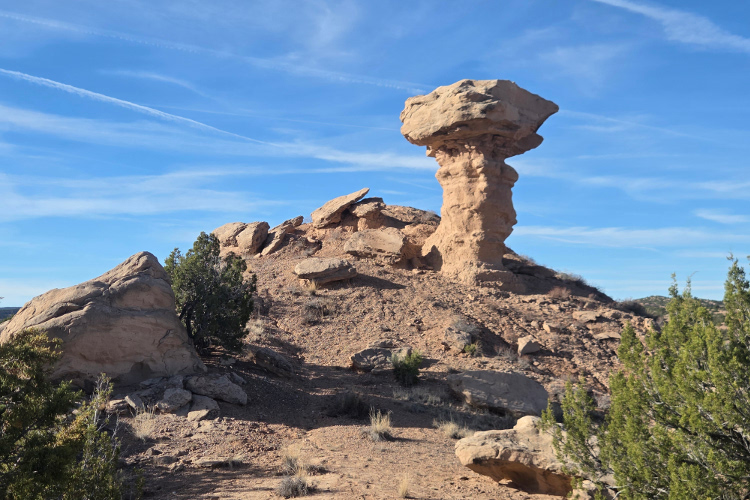
Camel Rock is a prominent landmark on the drive between Santa Fe and
Los Alamos. Rock formations like this, where softer rock erodes from
underneath harder rock, are known as hoodoos. In the summer and fall of
2026, several in the southwest collapsed, due to heavy
rainfail. By their very nature, they will not last forever...
It's the circle of geological life.
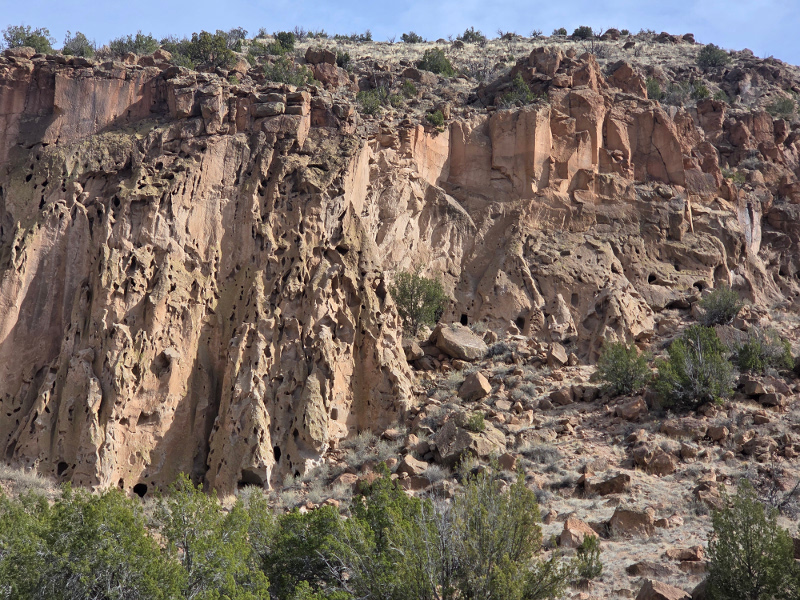
The cliffs in this region have been used by Native Americans and
birds to construct shelters. You can see many of both in Bandalier
National Monument.
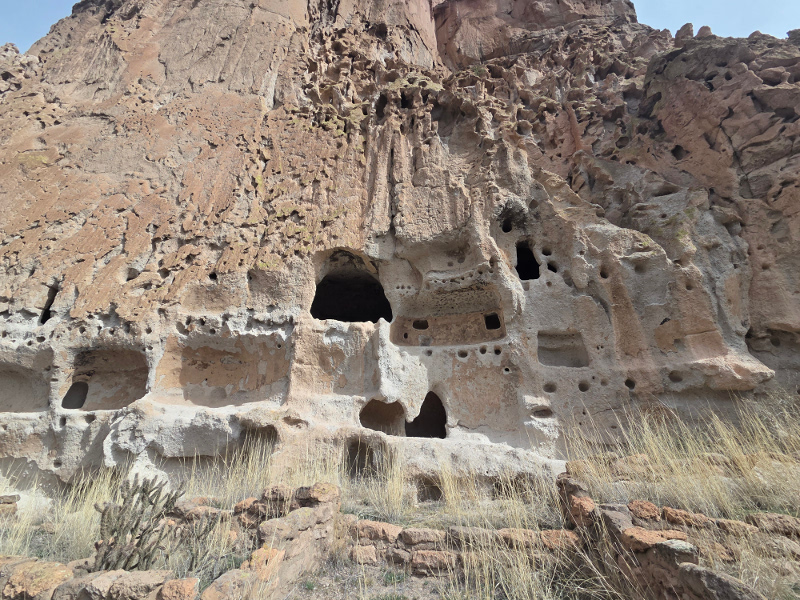
A closer look at some cliff dwellings.
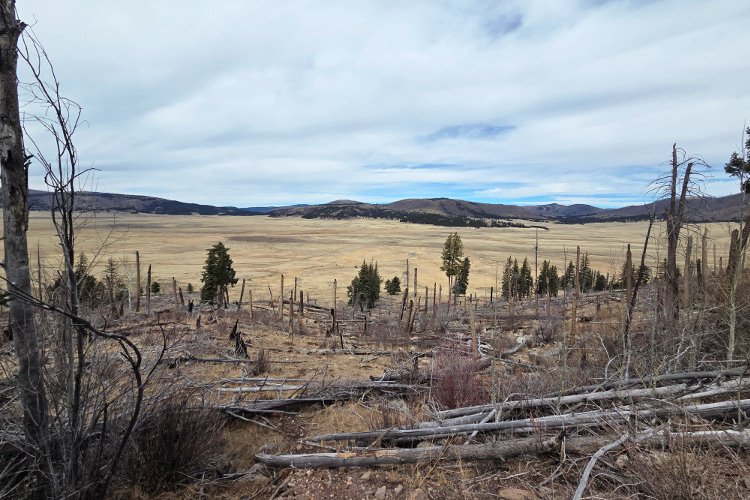
Nearby is the Valles Caldera, an extinct volcano at 9,000'.
The mouth of the the old volcano is now a grassland.
I saw several Gunnison's Prairie Dogs (Cynomys gunnisoni) here.
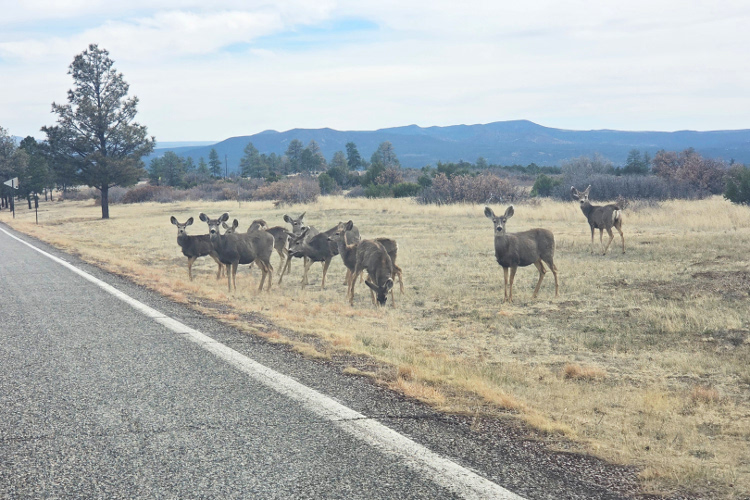
A herd of Mule Deer (Odocoileus hemionus).
In April, Roxanne and I met up with Rox's sister Jen and her
husband Tim. We spent several days exploring around the Santa Fe area.
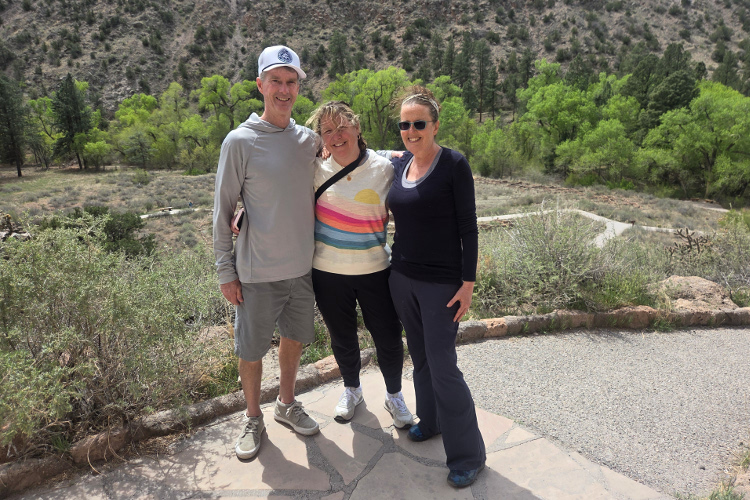
Tim, Jen, and Rox.
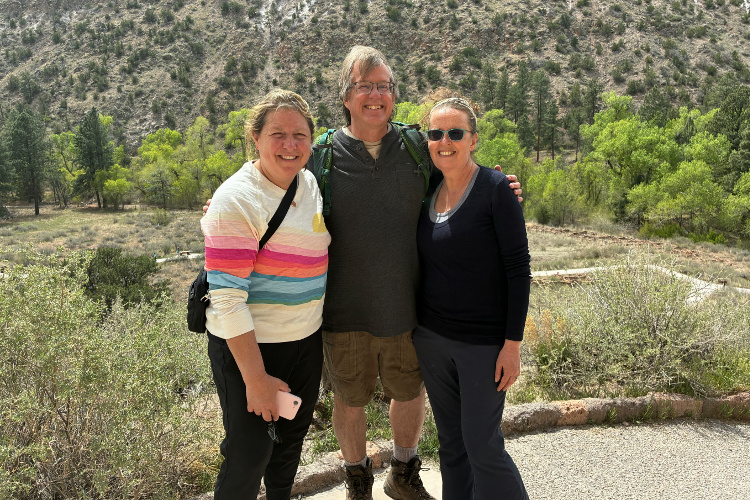
Another permutation, including me this time.
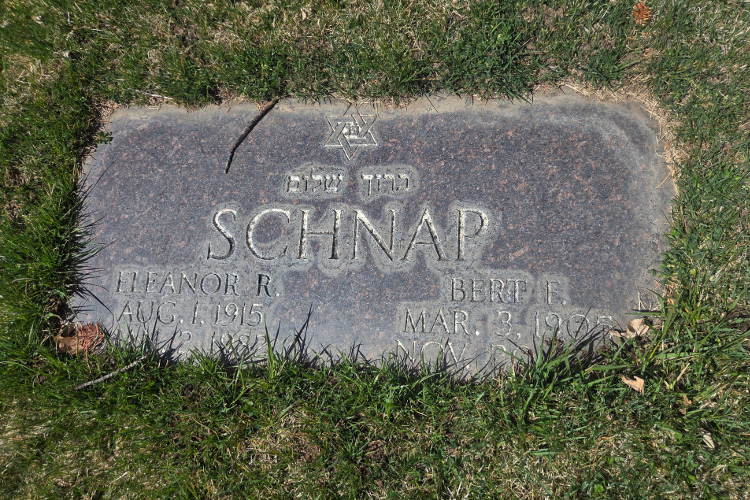
The grave of Rox's great aunt and uncle, Eleanor and Bert Schnap,
located at the Guaje Pines Cemetery in Los Alamos.
They came here during the Manhattan Project,
and never left. Bert was a biochemist, one of the first to study the effects
of radiation on living things.
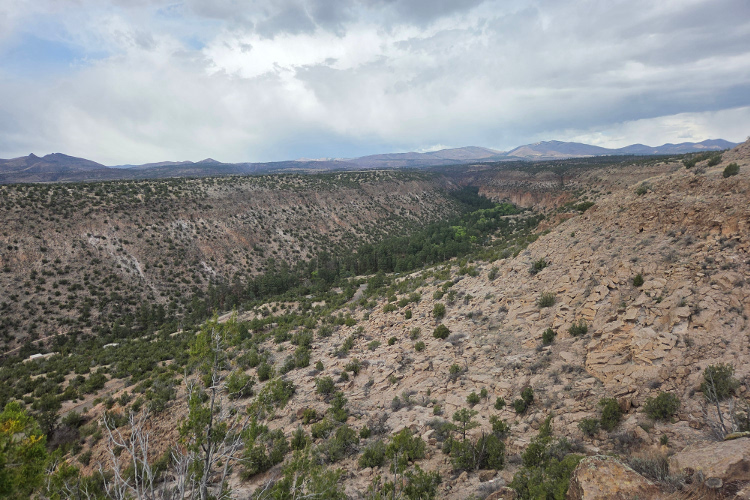
Overlooking Frijoles Canyon in Bandalier National Monument.
The Native American cliff dwellings shown above are down in this canyon.
One day, Tim and I did some off-road exploring on the La Bajada Mesa,
southwest of Santa Fe.
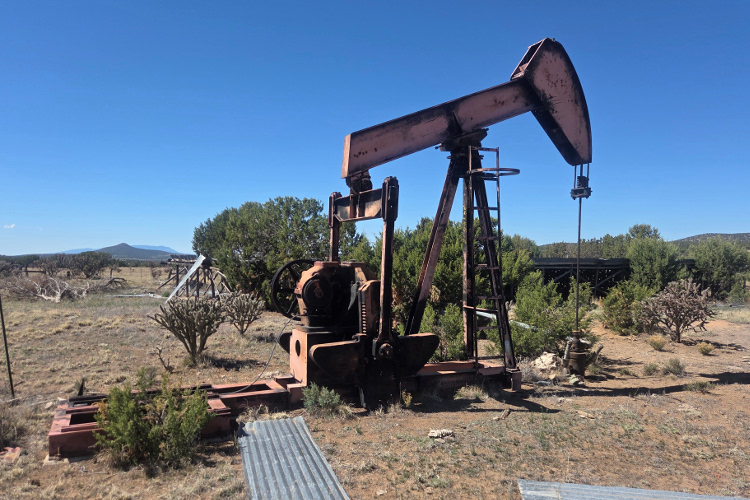
A random old pumpjack.
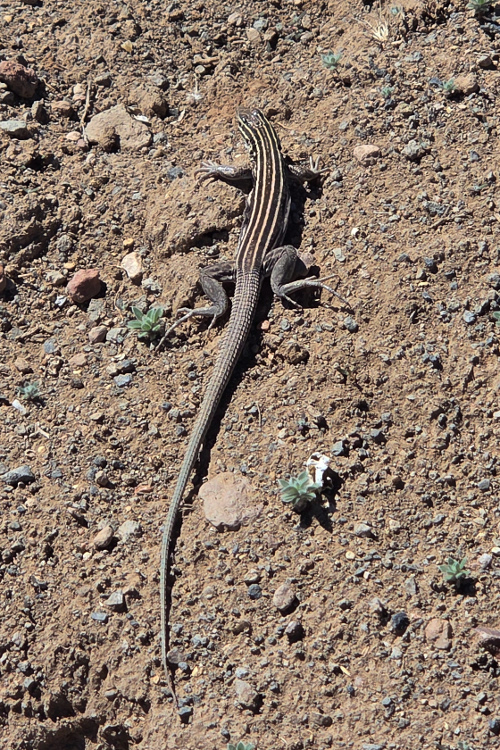
Plateau Striped Whiptail (Aspidoscelis velox).
Whiptails in NM are a lot like dusky salamanders in the southern
Appalachians... I may have some mis-identified.
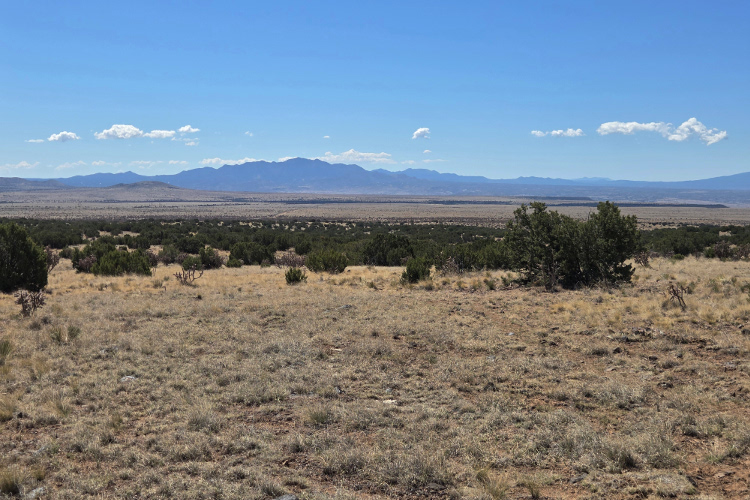
The landscape on the top of La Bajada Mesa. The 2025-6 winter and spring in
this region were among the driest ever recorded.
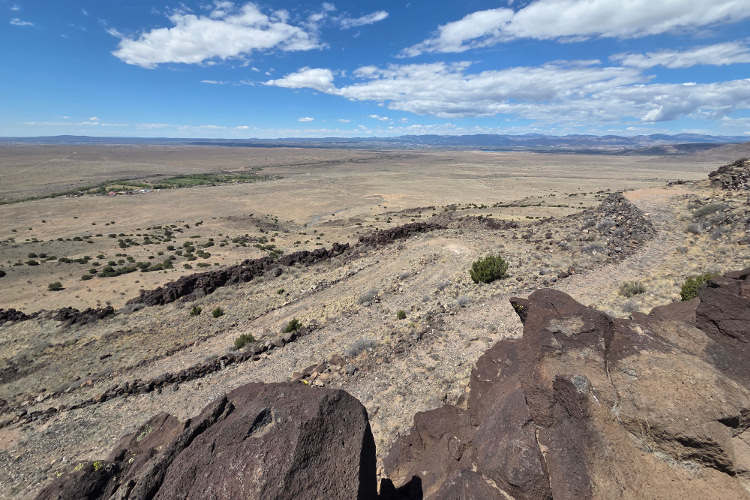
An old road going down off of La Bajada Mesa. It's well engineered, but now
very rough. Tim and I stumbled upon it. Turns out,
this was the path of Route 66 from 1926 through 1932. It saw over
1000 cars/day back then. I should mention that 2026 is the 100-year
anniversary of Route 66, aka The Mother Road.
Here is some more information about the history:
New
Mexico: La Bajada Mesa.
Not surprisingly, we saw an Eastern Collared Lizard
(Crotaphytus collaris) here.
It looked very similar to the one shown below.
That's it for the La Bajada Mesa. There rest of the photos are from
elsewhere in central-ish New Mexico.
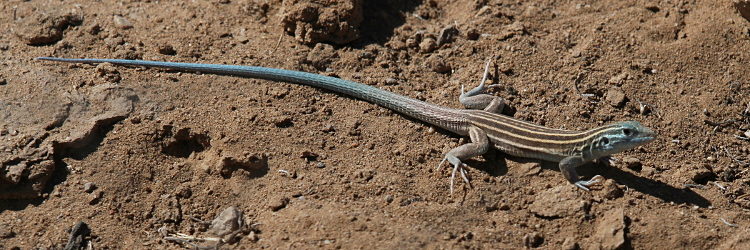
Little Striped Whiptail (Aspidoscelis inornata).
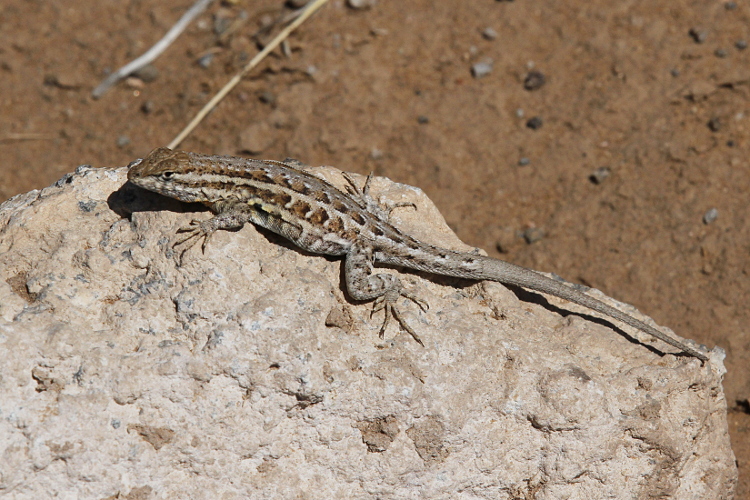
Side-Blotched Lizard (Uta stansburiana).
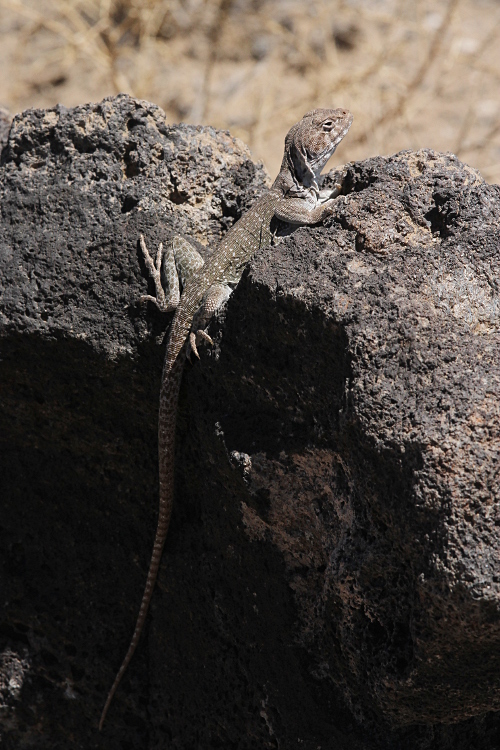
Eastern Collared Lizard (Crotaphytus collaris).
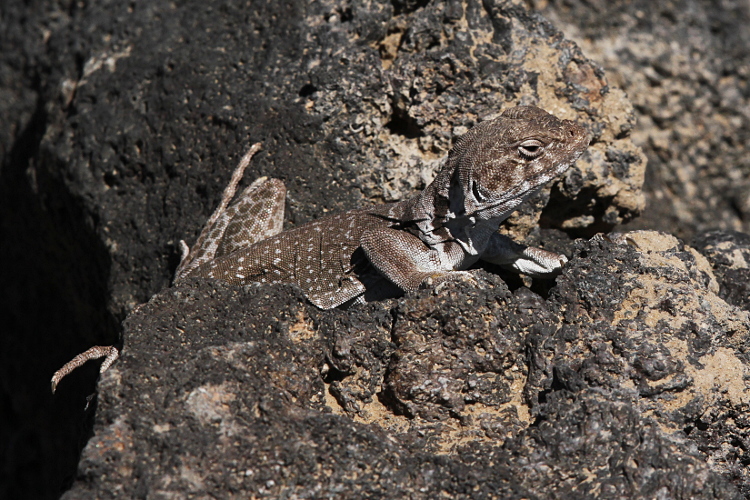
Another look. It's coloration is doing a good job of matching the dark
lava rock.
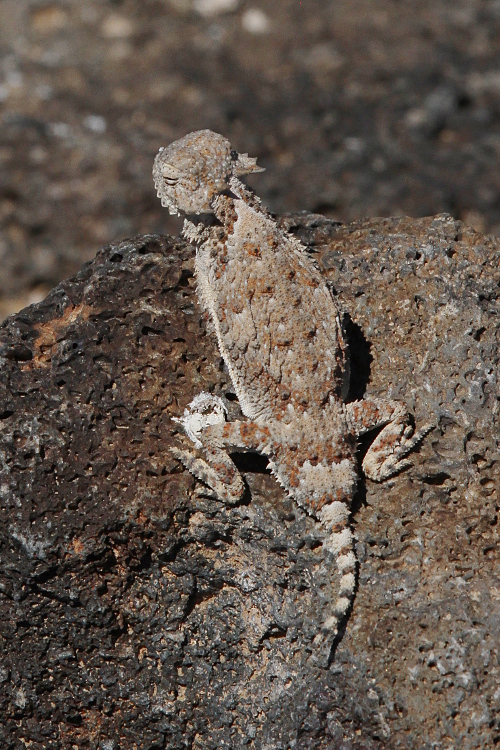
Roundtail Horned Lizard (Phrynosoma modestum).
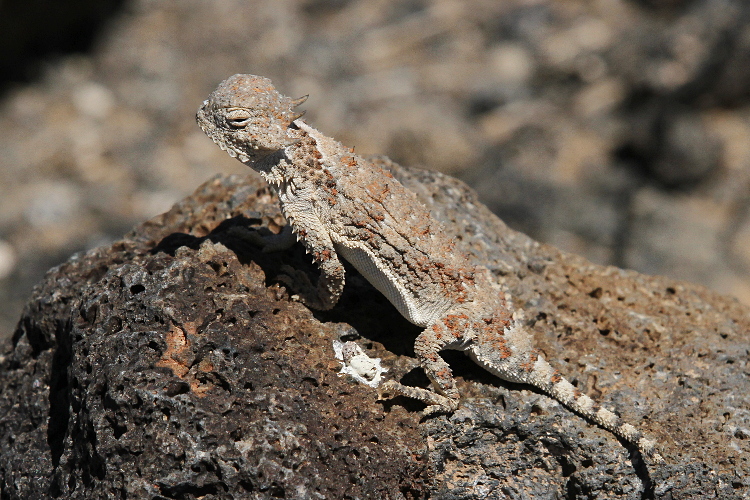
Another look. The lack of side fringes is evident.
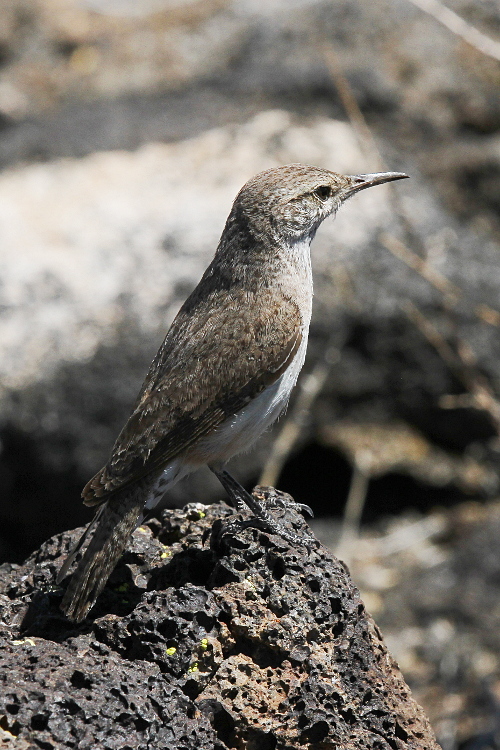
Rock Wren (Salpinctes obsoletus). Not unusual to see these in
the western US when looking for reptiles.
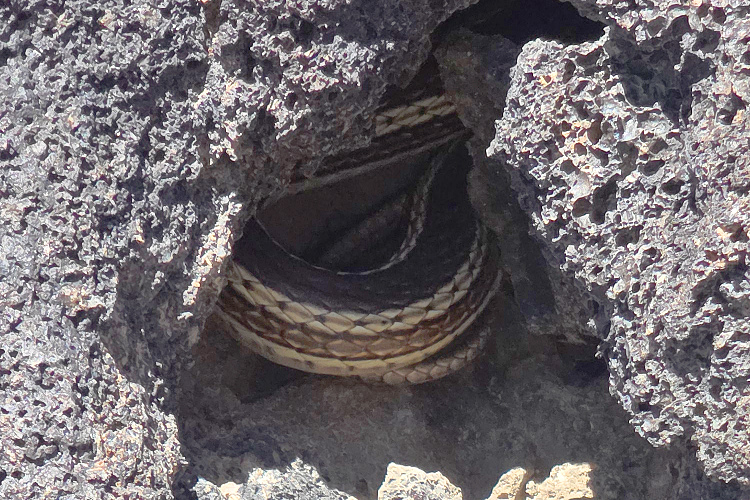
A Desert Striped Whipsnake (Masticophis taeniatus) that Rox spotted
in a hole in a big lava rock.
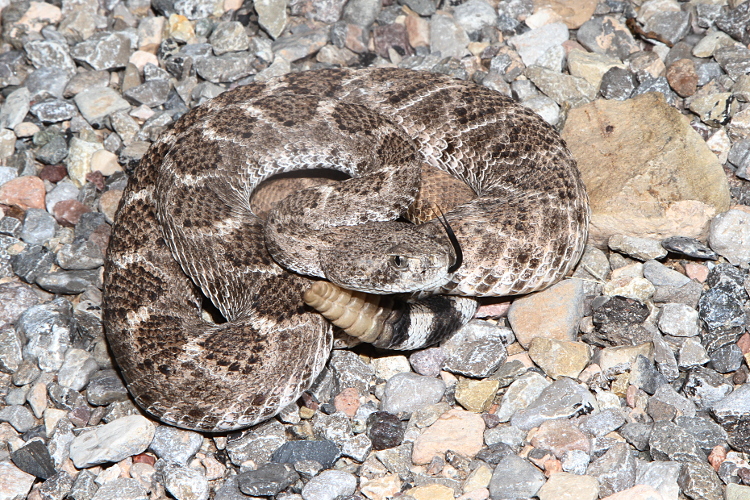
Western Diamondback Rattlesnake (Crotalus atrox).
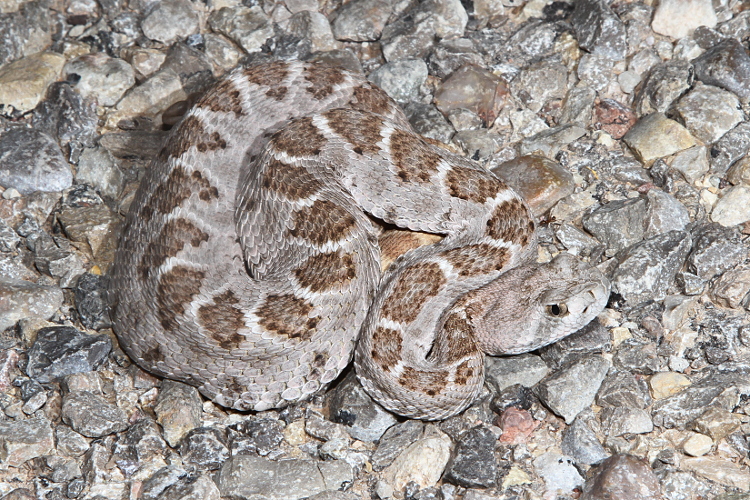
A smaller Western Diamondback.
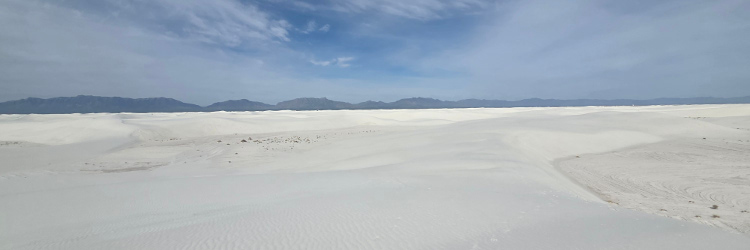
White Sands.
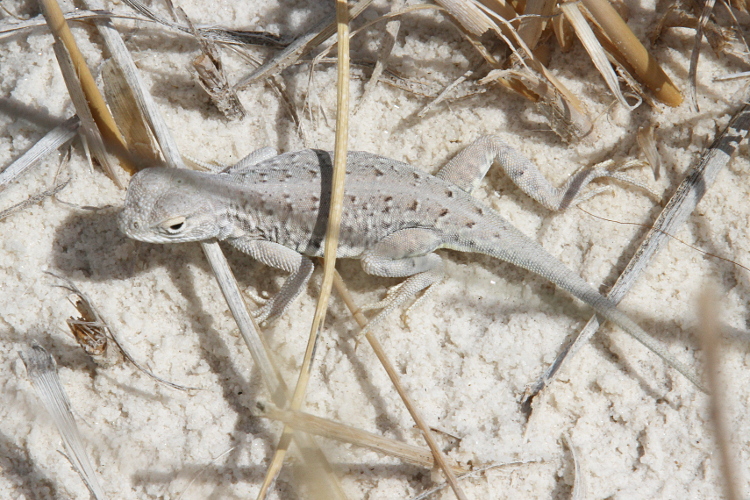
Bleached Earless Lizard (Holbrookia maculata ruthveni).
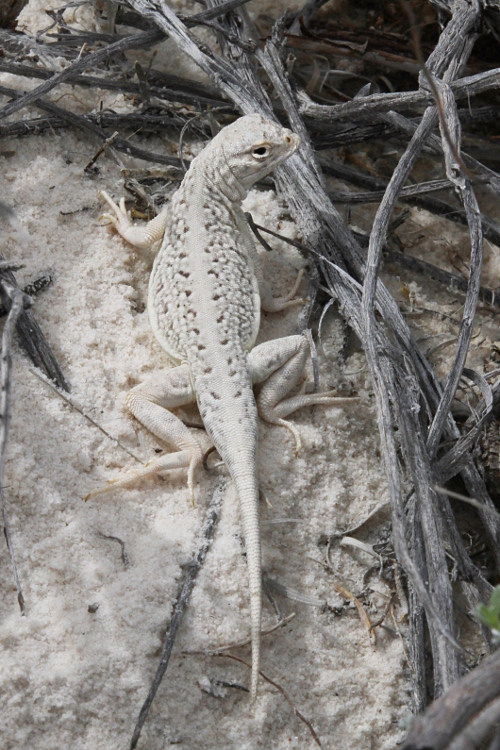
Another Earless Lizard at White Sands.
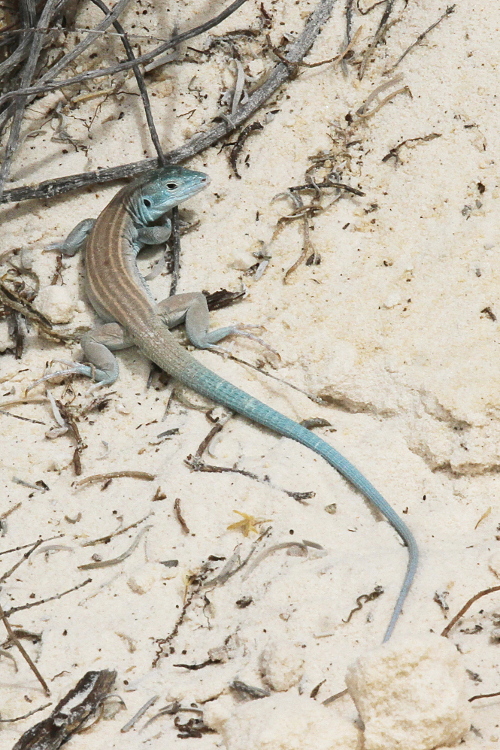
Little White Whiptail (Aspidoscelis gypsi).
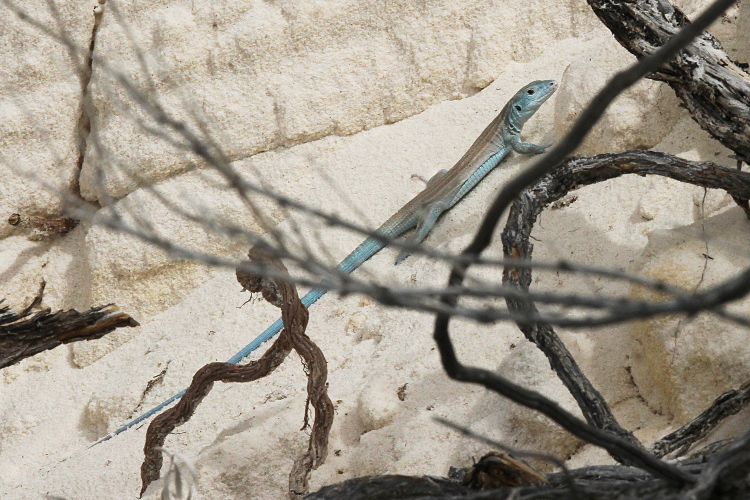
Little White Whiptail.
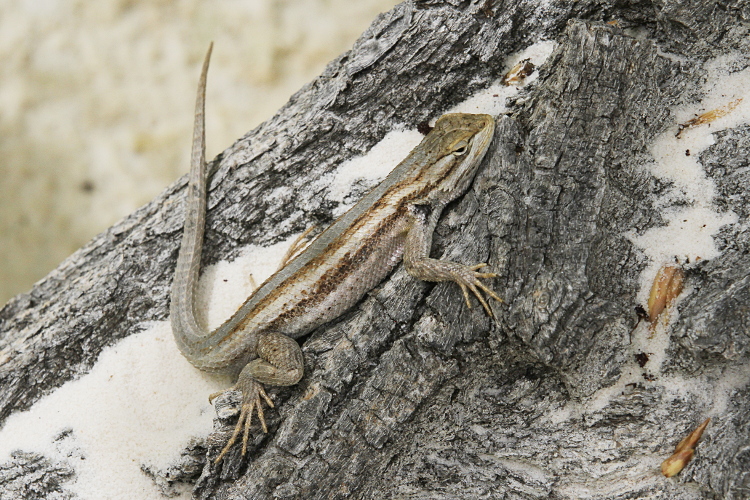
A Southwestern Fence Lizard (Sceloporus cowlesi), found at
White Sands. I will also mention the old-school common name,
Cowles Prairie Lizard. It rolls of the tongue nicely.
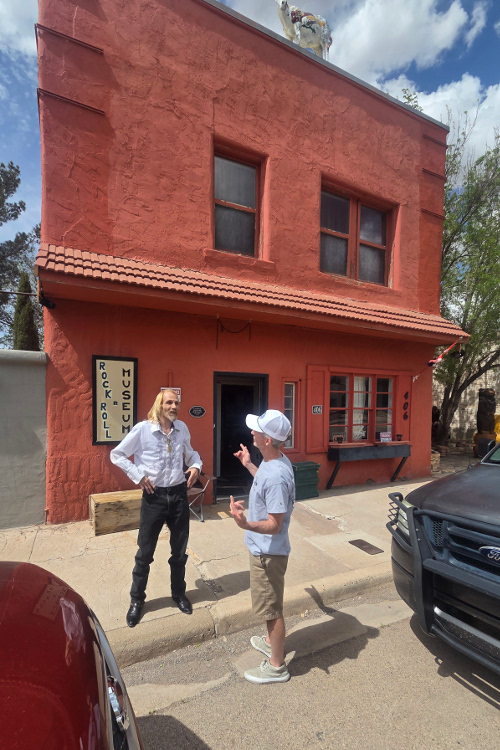
The quirky Rock-n-Roll Museum in Carrizozo, NM. Definitely worth a look
if you are in the area. Here, Tim is talking to the owner/proprietor
James Lane. It turns out James lived in Pasadena, CA in the same time frame
that I did (late 80s, early 90s).
Rox, Jen, and Tim left for home after this. I stuck around, as I would be
working at Los Alamos the following week. Here's a few more photos.
Here's some Native American petroglyphs I saw on a hike near
Albuquerque.
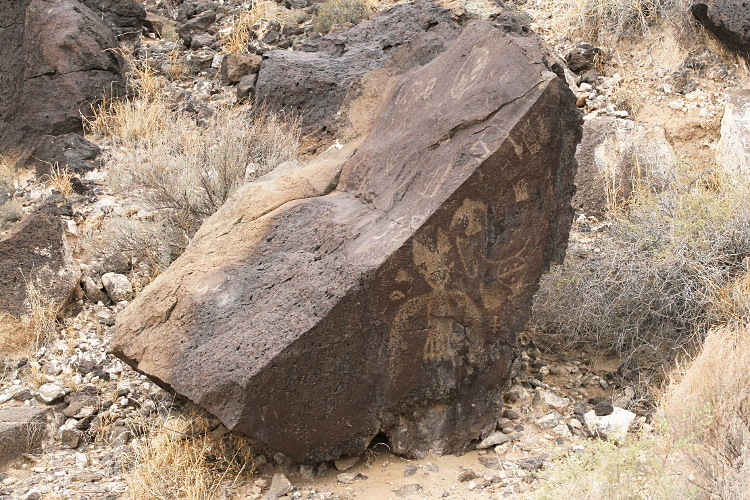
Many of them are hard or impossible to figure out.
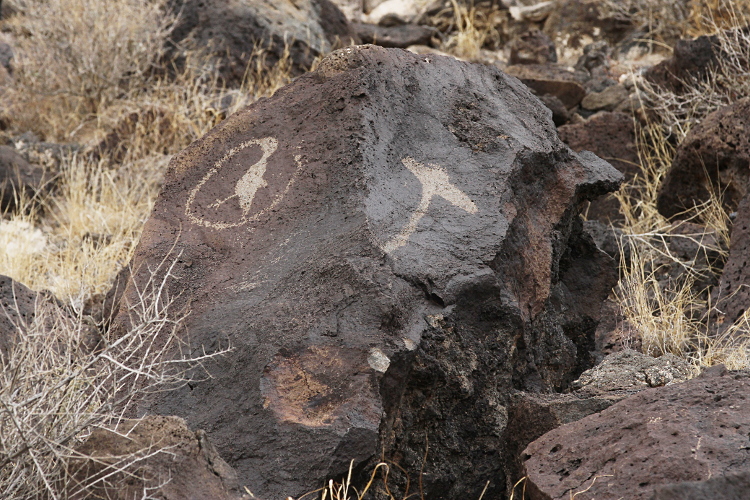
A long-tongued bird?
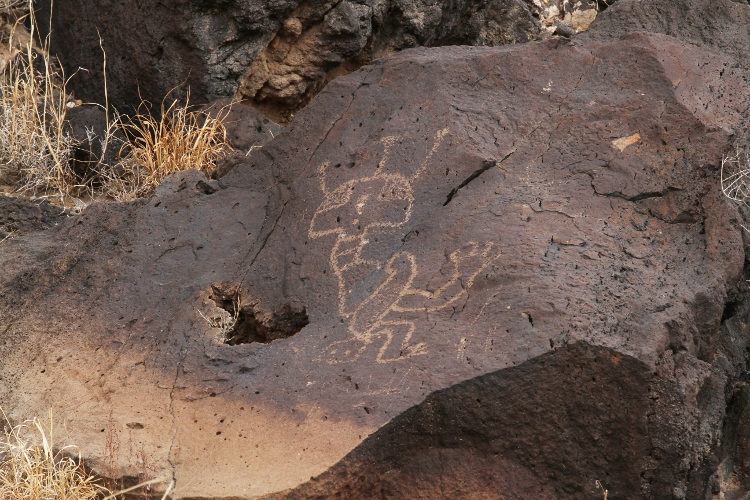
Makes you wonder if aliens paid a visit here at some point...
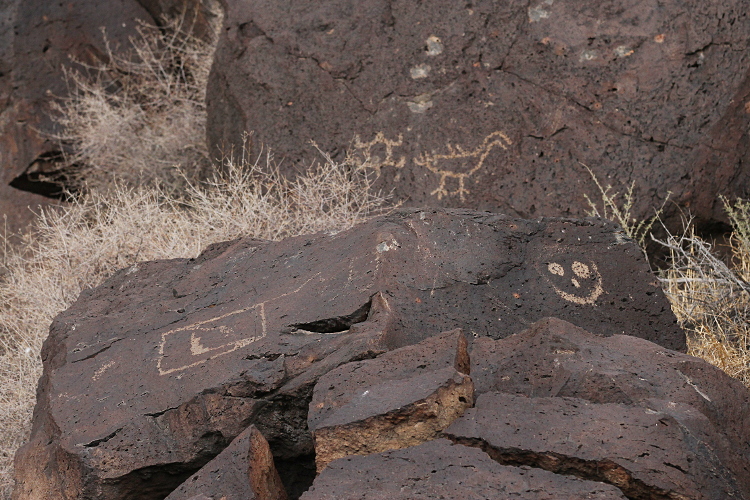
I like the face on this one.
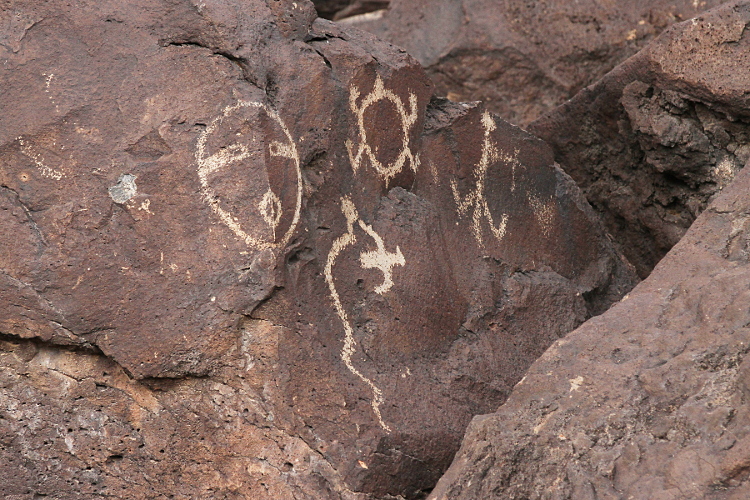
I see a snake and turtle or horny toad here...
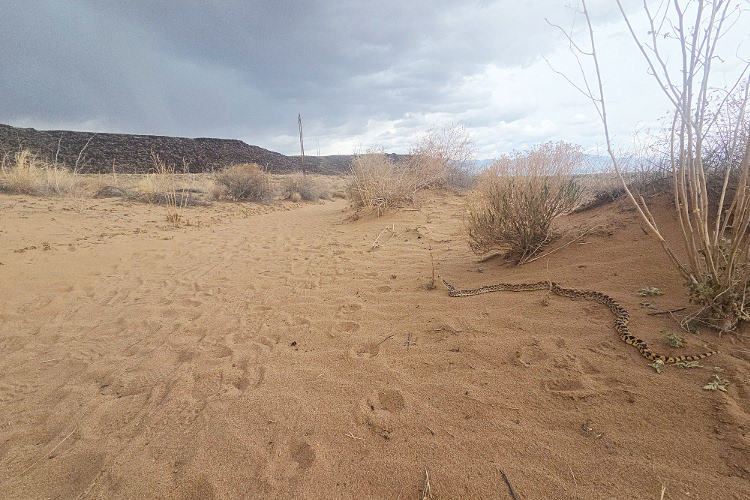
A Sonoran Gopher Snake (Pituophis catenifer affinis) and an
approaching storm. Snake shown as found just off of a trail.
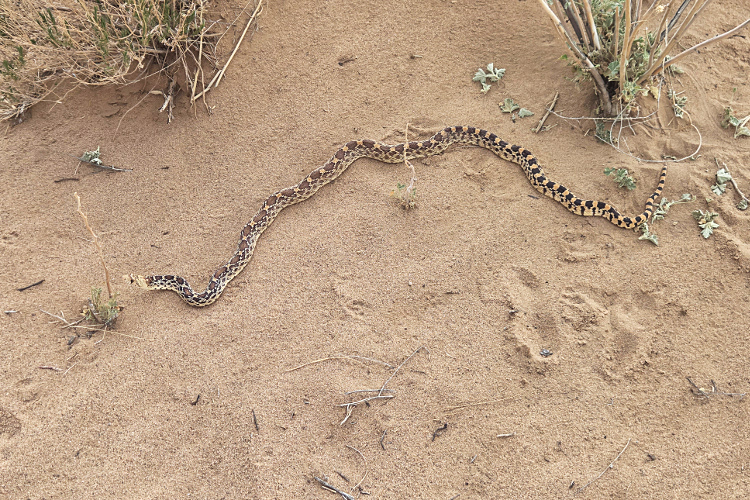
A closer look.
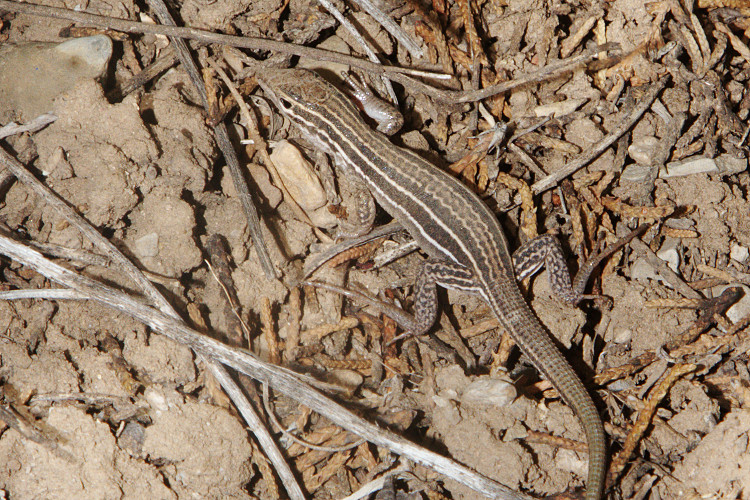
Desert Grassland Whiptail (Aspidoscelis uniparens).
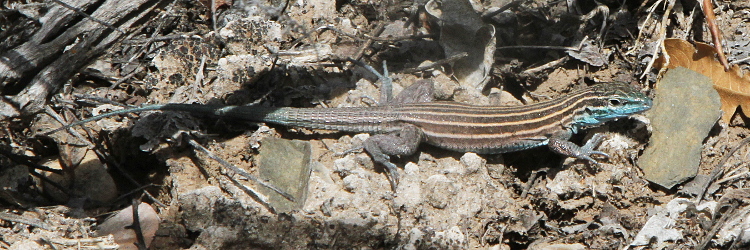
Little Striped Whiptail (Aspidoscelis inornata).
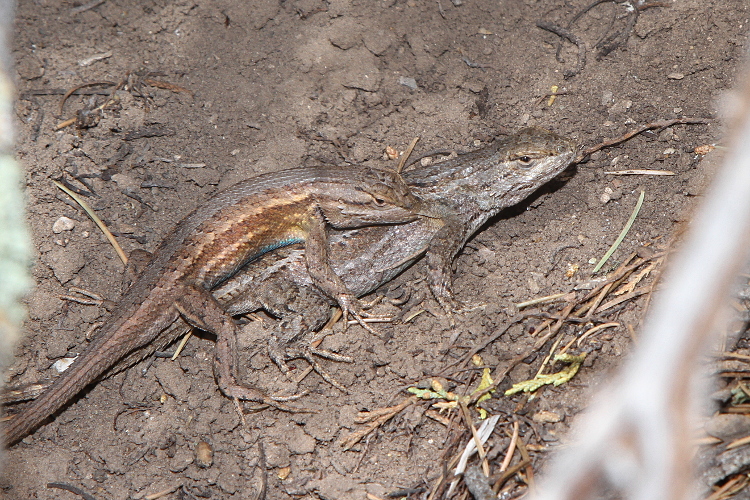
An amorous pair of Southwestern Fence Lizards. If you look closely, you can
see that the male has a bite on the female. It was kind of amusing.
The female was worried about me and wanting to run away, while the male
was laser focused on other things.
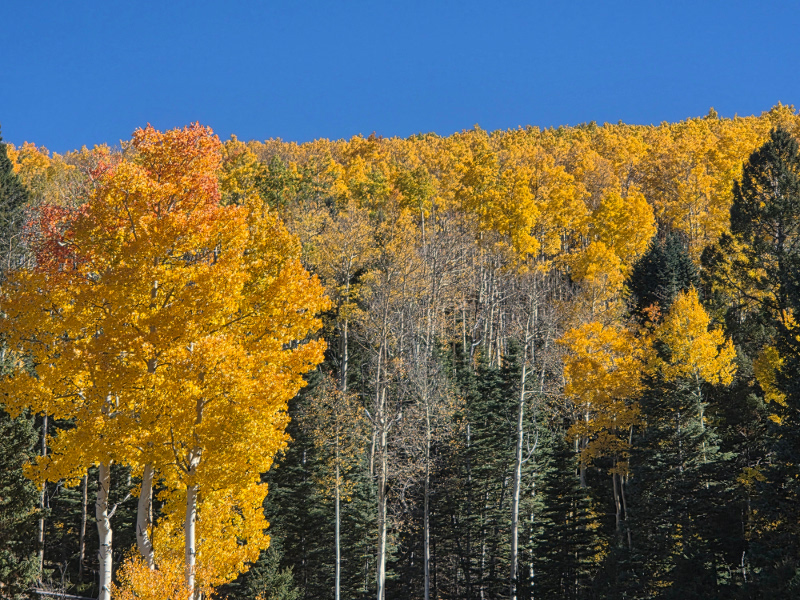
In mid October, I took a drive to higher elevations in the
Sangre de Cristo Mountains. The aspens were spectacular.
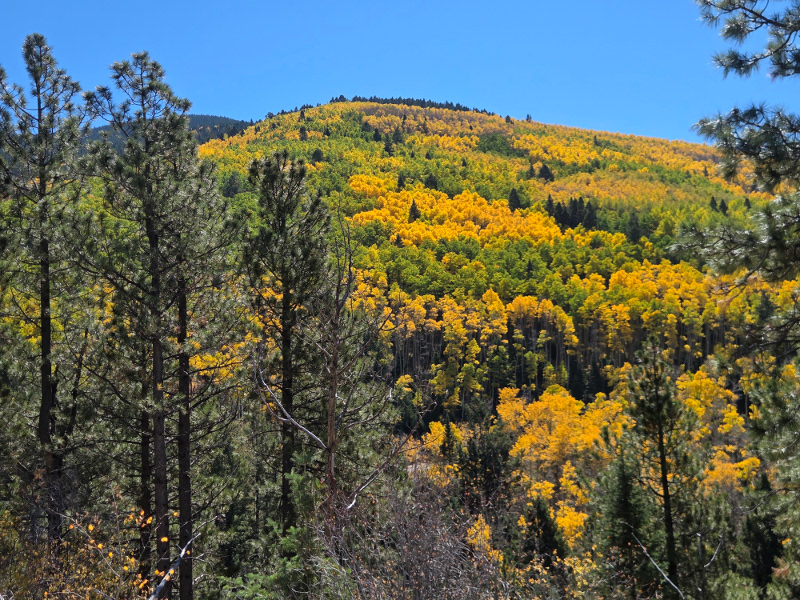
Another vantage point.
That's all for my 2026 visits to the Land of Enchantment aka New Mexico.
Return to Carl's photos.